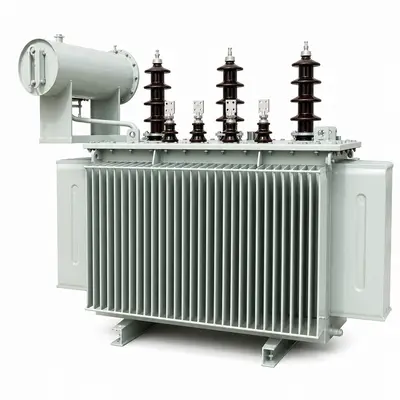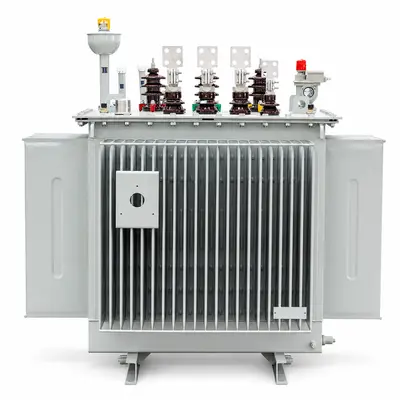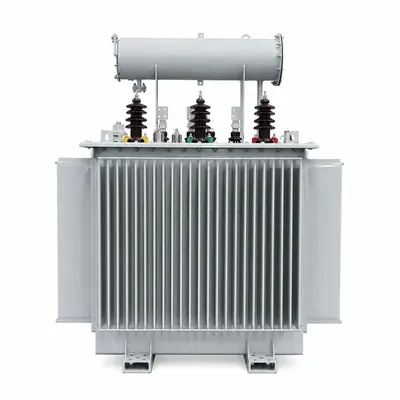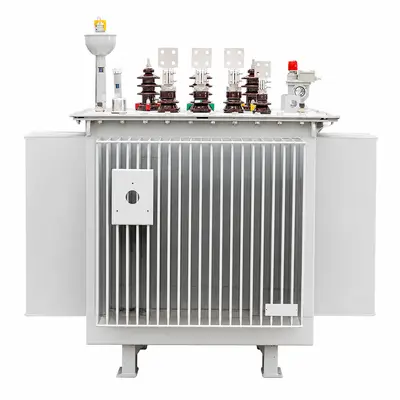
Factory acceptance testing is the point at which a transformer's design promises are checked against measured reality before the unit ever leaves the factory, and understanding what is tested, how results are judged, and how to arrange to witness it is essential for any buyer specifying equipment to IEC 60076. This guide covers the standard's routine test requirements, where type tests fit in, how acceptance tolerances work, what documentation should accompany a unit, and the practical mechanics of witnessing a test in person, through a third party, or remotely.
Routine tests versus type tests versus special tests
IEC 60076-1 organises transformer testing into three categories, and the distinction matters because it determines which tests apply to your specific unit and which were already proven on a representative design sample. Routine tests are performed on every transformer manufactured, without exception, because they confirm both that the individual unit meets its guaranteed electrical values and that no manufacturing defect (a shorted turn, a loose connection, an insulation flaw) is present. Type tests are performed once on a representative unit of a given design and rating to demonstrate the design itself performs as claimed under conditions too demanding or destructive to apply to every unit — temperature rise and lightning impulse withstand are the two most significant examples. Special tests are additional tests agreed between purchaser and manufacturer for particular project requirements, such as zero-sequence impedance measurement, sound level measurement, or short-circuit withstand verification, and are performed when specified in the contract or requested by the buyer rather than as a standard requirement.
Routine tests in detail
The table below summarises the principal routine tests required by IEC 60076-1 and the purpose each serves.
| Routine test | What it checks |
|---|---|
| Winding resistance | Confirms conductor and connection integrity; a baseline for future maintenance comparison |
| Voltage ratio and vector group | Verifies turns ratio matches nameplate and phase displacement (vector group) is correct for parallel operation |
| Short-circuit impedance and load loss | Confirms leakage impedance and load (copper) loss match guaranteed values, affecting fault current calculations and efficiency |
| No-load loss and current | Confirms core (iron) loss and magnetising current match guaranteed values, affecting no-load efficiency and excitation requirements |
| Applied voltage withstand | Verifies insulation between windings and to earth withstands a defined AC overvoltage for a set duration |
| Induced voltage withstand | Verifies inter-turn and phase-to-phase insulation withstands an elevated-frequency overvoltage applied through the winding itself |
| Partial discharge measurement | Detects internal insulation weaknesses through discharge activity; mandatory above 72.5 kV class and commonly requested for lower voltages or dry-type units |
| Oil dielectric and quality tests (oil-immersed units) | Confirms insulating oil meets breakdown voltage and moisture content requirements before energisation |
Winding resistance measurement is typically the first electrical test performed and also establishes a reference value that maintenance teams can compare against years later to detect developing winding problems. The ratio and vector group check confirms the transformer will operate correctly if paralleled with other units or connected into a network with a defined phasing requirement — an error here would only surface as a serious problem during commissioning if not caught at the factory. Impedance and load loss, together with no-load loss and current, are the tests procurement teams tend to focus on most closely because they translate directly into efficiency and into the guaranteed values written into the purchase contract; these are also the tests most directly subject to the tolerance rules discussed below. Applied and induced voltage tests confirm the transformer's insulation system can withstand overvoltage events it may see in service, applied respectively from outside the winding and induced through it. Partial discharge measurement, mandatory at 72.5 kV class and above, detects incipient insulation defects that would not necessarily fail a withstand test outright but indicate a weakness likely to develop into a fault over time; many buyers specify it for lower-voltage oil-immersed and dry-type units as well, particularly for critical or hard-to-access installations, given the additional confidence it provides at relatively low incremental cost.
Type tests: temperature rise and lightning impulse
Temperature-rise testing verifies that under rated load the transformer's top-oil and winding hottest-spot temperatures stay within limits appropriate to its insulation class, confirming the cooling design and loss values are consistent with the thermal rating claimed on the nameplate. Because this test takes the unit through a sustained loading cycle and is time-consuming and resource-intensive, it is performed once on a representative unit of a given design rather than repeated on every transformer of that type — subsequent units of the same design rely on the type test having already demonstrated the design meets its rating, provided no significant design change has been introduced. Lightning impulse withstand testing applies a standardised steep-front, short-duration voltage waveform to simulate the effect of a lightning-induced surge reaching the transformer through its connected lines, verifying the insulation system can withstand transient overvoltages well above normal operating levels without failure. Both tests are available on request for a specific project even where not contractually mandatory, and buyers specifying a new or unusual design variant should confirm whether a current type test certificate exists for that exact configuration or whether a new type test is required.
Acceptance criteria and tolerances
IEC 60076-1 does not expect measured results to match guaranteed values exactly; it defines tolerance bands within which a measured result is still considered compliant, recognising that manufacturing and measurement processes carry inherent variation. In broad terms, and described here generally rather than by reproducing the standard's precise tolerance tables, total losses are commonly permitted to exceed the guaranteed value by up to around 10%, while some individual loss components and combined tolerance checks (for example total losses plus impedance together) carry their own specific limits set out in the standard. Ratio tests are held to a tighter tolerance given how directly ratio errors affect parallel operation and protection settings, and impedance values likewise carry a defined tolerance band around the guaranteed figure. Buyers should treat the tolerance framework as normal and expected rather than a red flag when a test report shows a small positive deviation from guaranteed loss values — what matters is that the deviation sits inside the standard's permitted band and, where the contract specifies penalty or bonus clauses tied to loss values, that the actual measured figures rather than the guarantee are used for any such calculation.
Documentation to expect
A complete FAT package should include a formal test report presenting every routine test result against its guaranteed value and tolerance assessment, the transformer's nameplate data (matching the test report's serial number and rating), general arrangement and connection drawings, and, for oil-immersed units, an oil quality certificate confirming the insulating oil met dielectric and moisture specifications before filling or after final processing. Where type or special tests apply, either a current type test certificate for the design or the specific type test report generated for the contract should also be provided. Buyers importing equipment or working with project financiers and insurers should confirm early which of these documents are required in original, certified-copy, or digitally signed form, since requirements vary by destination country and by project.
Arranging witness testing
Three practical routes exist for witnessing a transformer FAT, and none is inherently superior — the right choice depends on project value, travel budget and timeline. In-person witnessing, either by the buyer's own engineer or a nominated representative, gives the most direct oversight and the opportunity to raise questions or request repeat measurements on the spot. Third-party inspection bodies such as SGS, TUV or Bureau Veritas (referenced here in general terms as examples of the type of independent inspection agency commonly used, not as an endorsement of any specific engagement) can be nominated to attend on the buyer's behalf, which is common where the buyer's own engineers cannot travel or where a project's financing or insurance terms require independent verification. Remote or video FAT has become a well-established third option: the test sequence and live instrument readings are streamed to the buyer in real time, with the manufacturer's test engineers narrating each step and confirming readings as they are taken, giving most of the assurance of in-person witnessing without the associated travel cost and time. Whichever route is chosen, it should be agreed with the manufacturer well ahead of the scheduled test date, including which specific tests will be witnessed (buyers do not always need to witness every routine test in the sequence), what advance notice the factory needs, and how test data and reports will be delivered afterward.
Talk to Millenium
Every transformer we build is routinely tested to IEC 60076-1 before dispatch, and we welcome customer and third-party witnessing in person, through an independent inspection body, or by live video FAT. To discuss your project's test requirements and documentation, contact jensen@millenium-electric.com or WhatsApp +86 175 0213 9434.